1. The Rigorous "Main Round" Tournament Format
The European Handball Championship (EHF EURO) is staged biennially in January, presenting what is widely regarded as the most demanding gauntlet in international team sports. Unlike football or basketball tournaments that transition immediately to single-elimination brackets, EHF EURO utilizes a grueling two-tiered group phase.
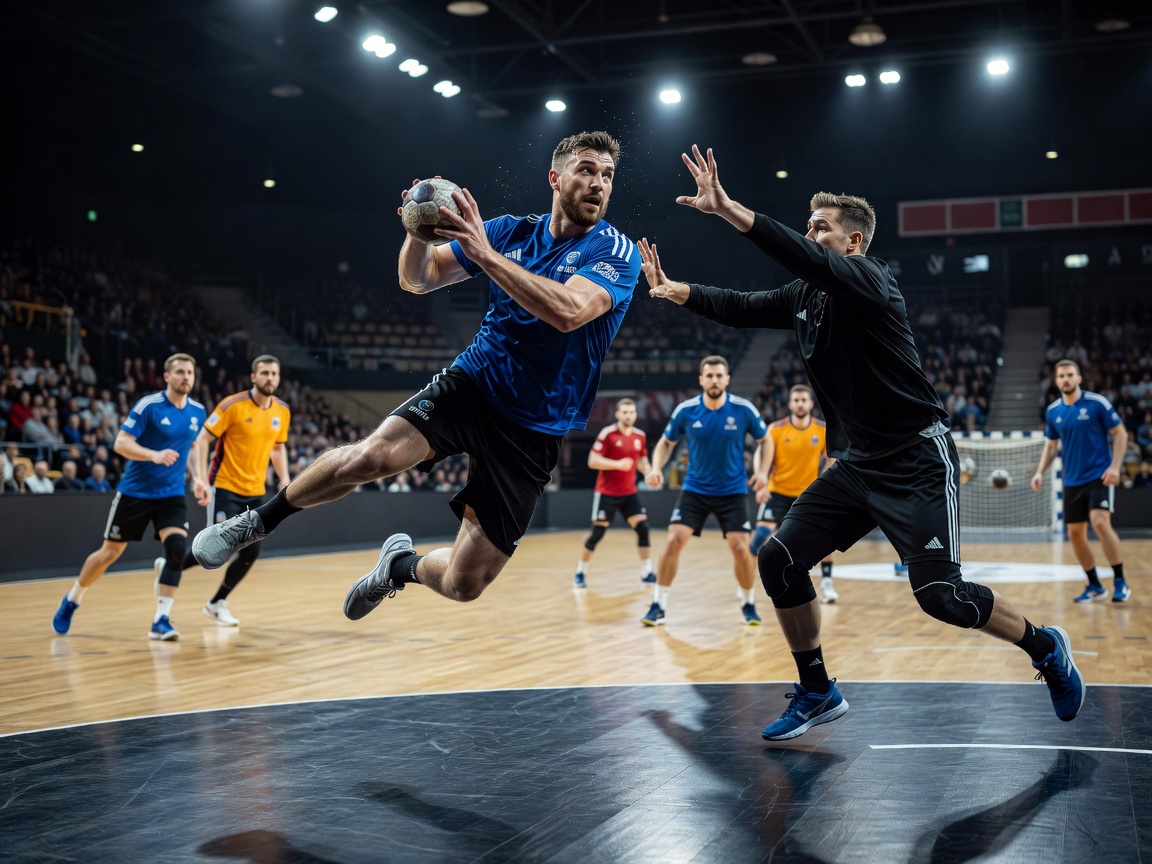
Preliminary to Main Round Transition
Twenty-four nations are split into six preliminary groups of four. The top two teams from each group advance to the 12-nation **Main Round** (divided into two groups of six). Critically, results earned against advancing preliminary opponents are carried over, meaning every group fixture carries existential championship weight. Only the top two teams from each Main Round group advance to the Semi-finals.
2. Key Specifications & Court Dynamics
| Metric | EHF Official Guideline | Operational Notes |
|---|---|---|
| Governing Body | EHF (European Handball Federation) | Vienna, Austria |
| Match Format | 60 Minutes (2x 30m halves) | Rolling unlimited substitutions |
| Court Surface | EHF Certified Taraflex Synthetic Flooring | 40m x 20m with 6m & 9m Goal Arcs |
| Goal Dimensions | 3.0m width x 2.0m height | Dual-color striped goal posts |
| Offensive Clock | Passive Play Warning (Max 4 passes after signal) | Strict referee discretion |
3. Tactical Battles: The 7-against-6 Revolution
Modern handball has been revolutionized by empty-net tactics (replacing the goalkeeper with an extra court player during attack). Defenses must balance the aggressive 6-0 flat line against flexible 5-1 or 3-2-1 disruption systems to combat lightning backcourt shooters from Denmark, France, Sweden, and Germany.