1. Tournament Anatomy & Competition Mechanics
Established in 1960 under the vision of Henri Delaunay, the UEFA European Championship has grown from a four-team knockout into a 24-nation continental showpiece. The modern finals structure spans 51 matches across six distinct groups (Groups A through F), followed by a high-stakes knockout phase comprising the Round of 16, Quarter-finals, Semi-finals, and the Grand Final.
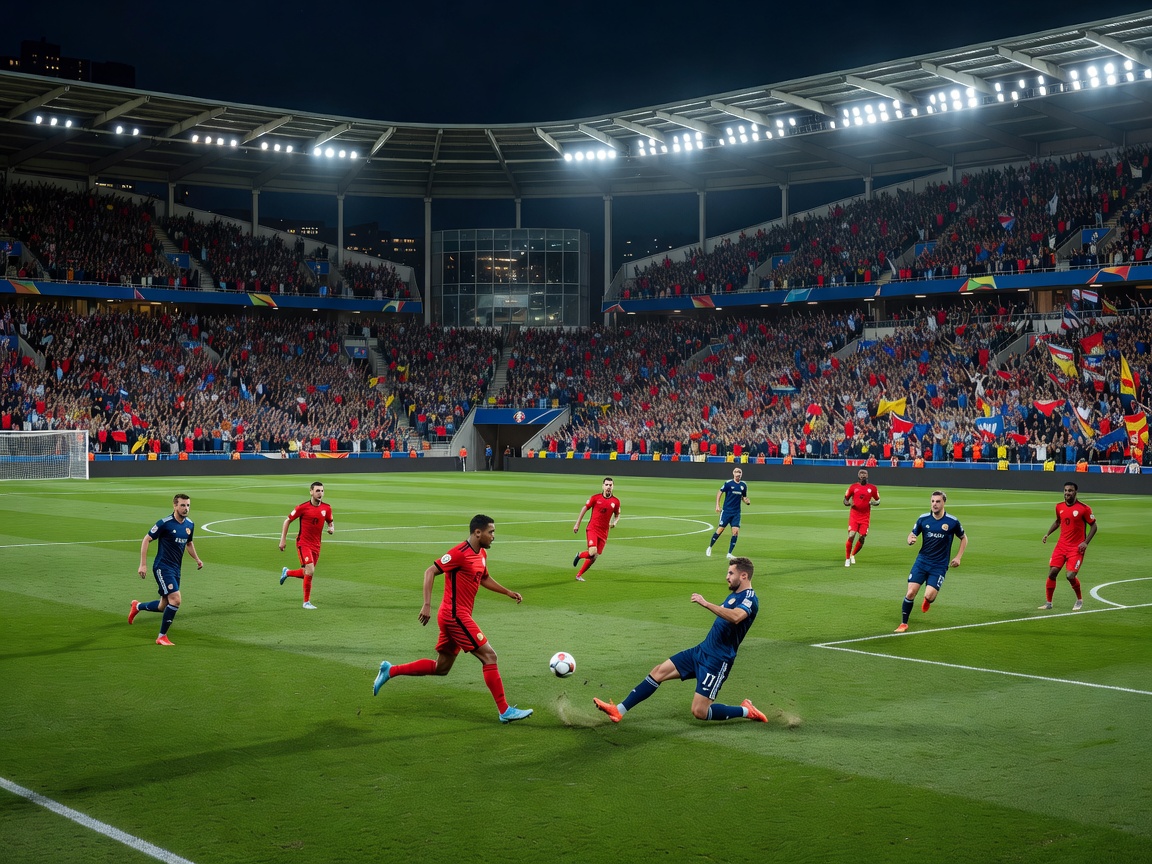
The Group Phase Qualification Formula
Each group features four national associations playing a single round-robin format. The top two teams from each group automatically qualify for the knockout phase, accompanied by the four best third-placed teams determined through a strict tie-breaking hierarchy: points, goal difference, goals scored, disciplinary points, and European Qualifiers overall ranking.
2. Key Specifications & Structural Metrics
| Dimension | Official Tournament Standard | Federation Regulation |
|---|---|---|
| Governing Body | UEFA (Union of European Football Associations) | Nyon, Switzerland |
| Finals Format | 24 National Teams / 51 Fixtures | 6 Groups of 4 + 4-Round Knockout |
| Match Duration | 90 Minutes (2x 45m) + 30m Extra Time + Penalties | IFAB Laws of the Game |
| Official Match Ball | Connected Ball Technology (Fussballliebe Series) | Real-time inertial sensors (500Hz) |
| VAR & Offside Tech | Semi-Automated Offside Technology (SAOT) | 10 Optical Tracking Cameras |
3. Iconic Stadiums & Host City Demands
Hosting a UEFA European Championship requires rigorous infrastructural compliance. Stadiums must possess UEFA Category 4 certification, with seating capacities ranging from minimum 30,000 for group stages to 70,000+ for the final. Iconic venues such as Berlin’s Olympiastadion, Munich’s Football Arena, Wembley Stadium in London, and the Stadio Olimpico in Rome anchor the tournament's monumental architectural legacy.
4. Historical Roll of Honour & Dominance
Spain and Germany stand as the joint-most successful nations in tournament history, each boasting multiple titles achieved through distinct philosophical eras—from Germany's tournament pragmatism in 1972, 1980, and 1996, to Spain’s possession-dominant *tiki-taka* masterclasses in 1964, 2008, 2012, and 2024.