1. The Multi-Nation Hosting Paradigm
FIBA EuroBasket is Europe's premier basketball championship. Since the groundbreaking 2015 format shift, FIBA Europe has adopted an innovative multi-host blueprint: four different nations stage the initial four round-robin groups, before all qualifying teams converge on a single central arena for the single-elimination knockout championship bracket.
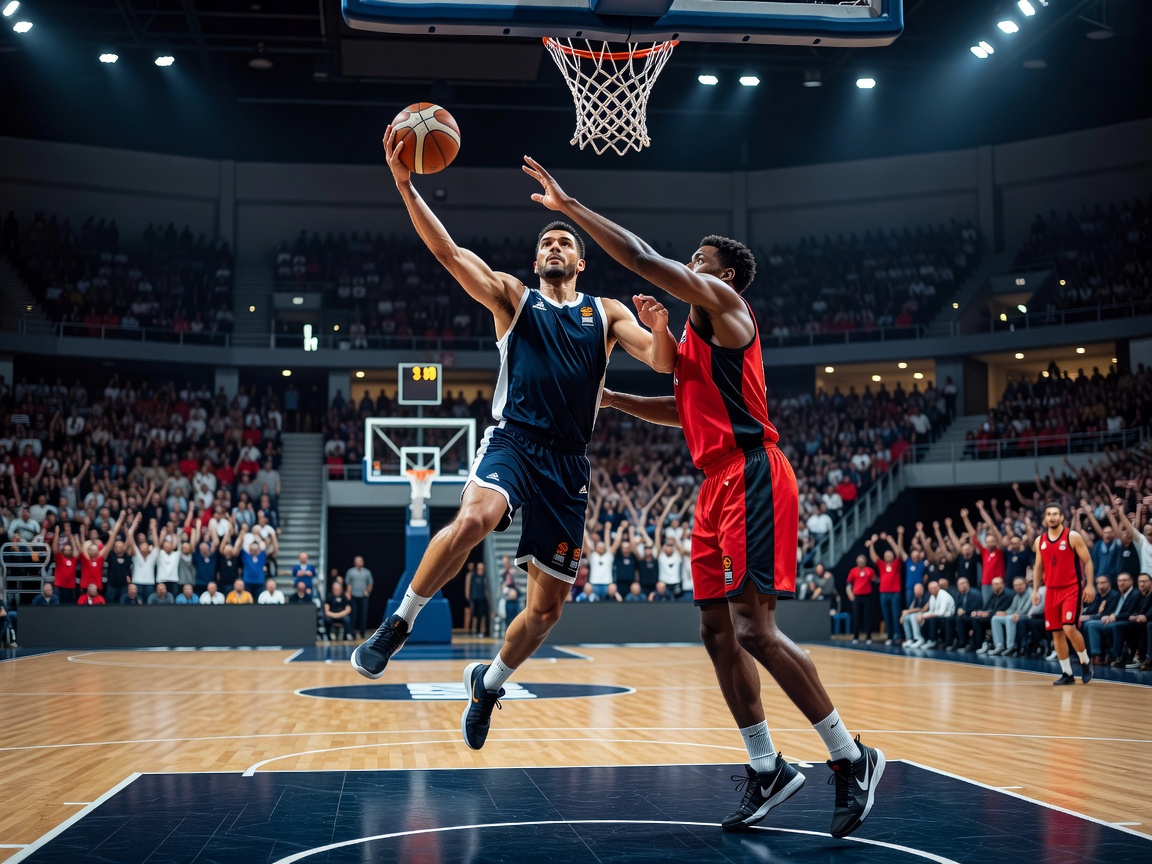
Tournament Structure & Knockout Mechanics
Twenty-four national teams are divided into four groups of six. Each team plays five round-robin matches. The top four teams from each group (16 teams in total) advance directly to the Round of 16, initiating a relentless single-elimination sprint to the Nikolai Semashko Trophy.
2. Technical Standards & Arena Specifications
| Component | FIBA Level 1 Requirement | Operational Standard |
|---|---|---|
| Governing Body | FIBA Europe | Munich, Germany |
| Court Surface | FIBA Approved Hardwood Flooring (Maple/Oak) | EN 14904 Shock Absorption ≥ 53% |
| Game Clock & 24s | Synchronized LED Precision Timing (1/100s) | Integrated Red Perimeter Backboard Light |
| Arena Capacity | Group: Min 10,000 | Final Phase: Min 15,000 | Category 1 FIBA Seating Rigidity |
| Video Review | Instant Replay System (IRS) | 8 Synchronized HD Multi-Angle Feeds |
3. Tactical DNA: European Space & Pace
Unlike the transition-heavy flow of North American basketball, EuroBasket is characterized by intricate half-court execution, secondary pick-and-rolls, high-post passing hubs, and defensive zone versatility. World-class players—including Giannis Antetokounmpo, Nikola Jokić, and Luka Dončić—compete within team-first tactical systems that reward defensive discipline and elite three-point perimeter efficiency.